I do not want Barrie to become a city cluttered with traffic and choked by congestion.
However, over the last five years, Barrie’s population has grown by 15 to 20 percent, while traffic has grown by close to 80 percent.
I see it as a Barrie resident. I also see it every day from behind the wheel as an Uber driver. Other Barrie residents see it when they sit in traffic on Mapleview Drive, Yonge Street, Essa Road, and other major roads. Travelling across our city is taking longer.
Barrie did not become 80 percent larger, but its traffic did. That tells us that population growth is not the only cause. The way we are building Barrie is forcing more daily trips onto our roads.
Barrie needs housing, including housing people can afford. I support growth. But approving more homes without planning how residents will reach work, school, groceries and daily services is not responsible growth. It simply adds more vehicle trips to roads that are already congested.
The choice is not between growth and no growth. The choice is between building functional communities and cluttering Barrie with car-dependent development.
Density is not the problem. Car-dependent density is.
Every new household creates daily trips. When the city approves hundreds of new homes, it is also approving thousands of daily trips. Residents need to get to work, buy groceries, take their children to school, attend medical appointments, visit family and participate in community life. These trips are a normal and unavoidable part of daily life, and each must be made by walking, cycling, public transit, private car or a ride-hailing service.
People will walk when destinations are close and routes are direct. They will use public transit when service is frequent, reliable and connected to the places they need to reach. When those conditions do not exist, routine trips are pushed into vehicles. Poor planning turns ordinary daily activities into additional traffic.
Residents without private cars still need to travel. If they cannot walk, cycle or rely on public transit, they must pay someone else to drive them or depend on delivery services. Car dependence does not mean that every resident owns a car; it means that the community requires a vehicle to meet ordinary daily needs. Density is not the enemy of a functioning city. Well-designed density can support local businesses, frequent transit and services within walking distance. Barrie must stop treating housing approvals and transportation planning as separate decisions.
The 700-metre test for a walkable community
I propose that every medium- and high-density residential development be evaluated using a 700-metre walking standard. Within that distance, residents should be able to reach groceries, public transit, parks and other daily necessities. Descriptions such as “nearby” or “a ten-minute walk” are imprecise because people walk at different speeds. Seven hundred metres gives planners, developers and residents a clear distance that can be measured.
The city must measure the route people can actually walk, not a straight line drawn on a planning map. That route should begin at the building entrance and follow safe, direct sidewalks and crossings to the destination. Fences, dead ends, oversized parking lots, unsafe crossings and disconnected sidewalks all increase the real walking distance. A destination can appear close while remaining difficult or inconvenient to reach on foot.
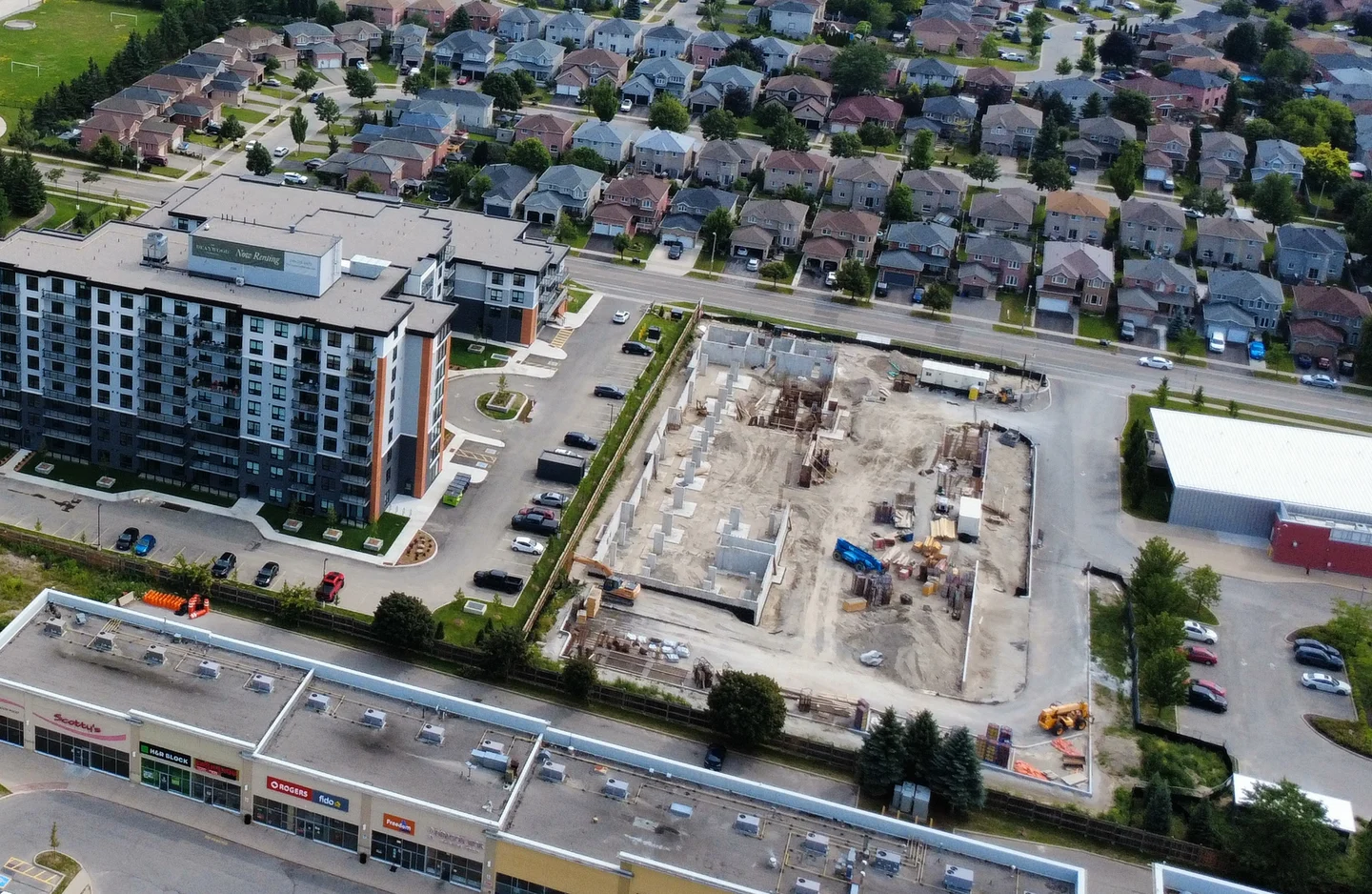
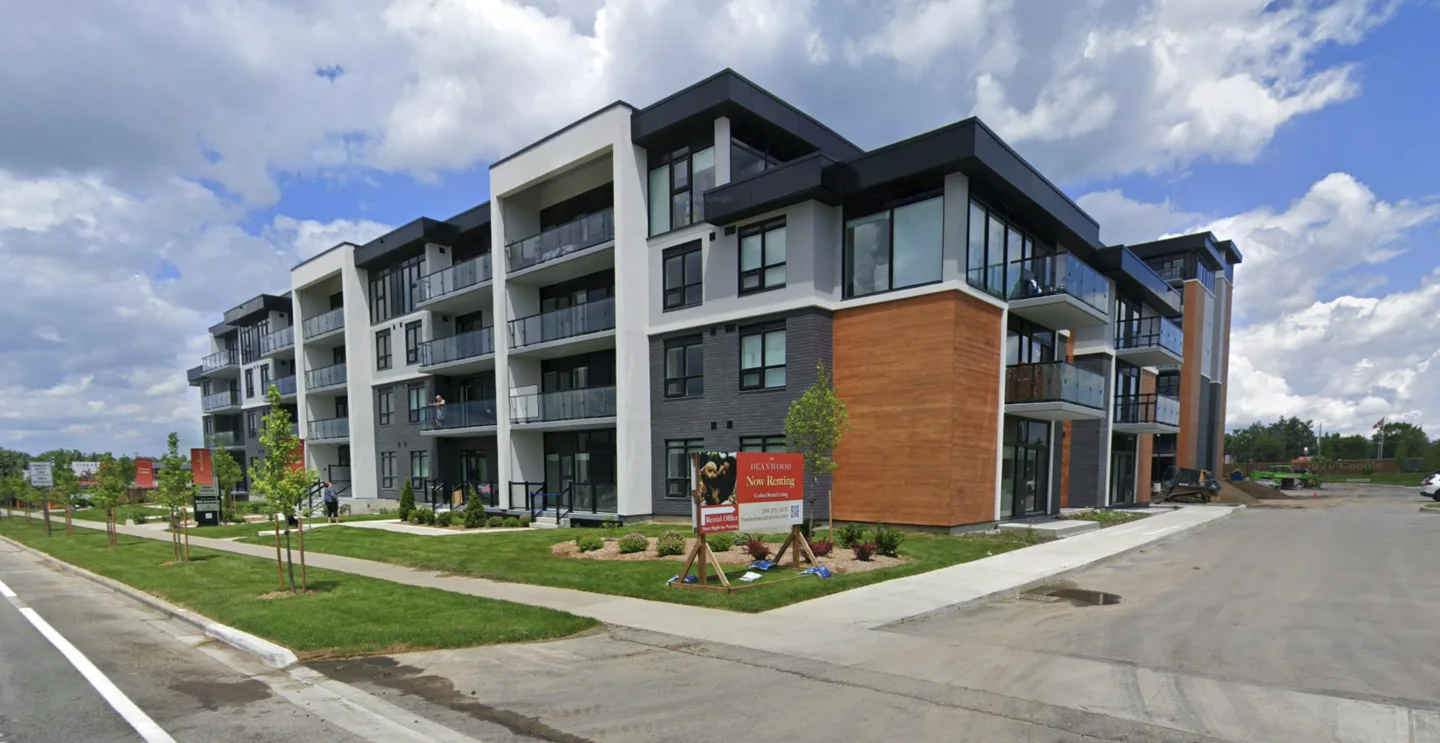
We can already see this problem in Barrie. One newly built rental apartment building sits directly beside a commercial plaza, but a fence separates the two properties. Residents can see the businesses from their building, yet they must leave the development and walk around the property to reach them. That is not walkability; it is proximity without access. We should stop approving designs that place useful destinations next door while making them difficult to reach.
Direct access matters for every daily destination, but grocery stores are the clearest test of a walkable community. When groceries are within walking distance, residents can make smaller and more frequent trips on foot instead of organizing one large trip that requires a vehicle. When the grocery store is outside practical walking distance, an essential household activity becomes car-dependent. Housing should not be approved on the assumption that necessary services will somehow arrive later.
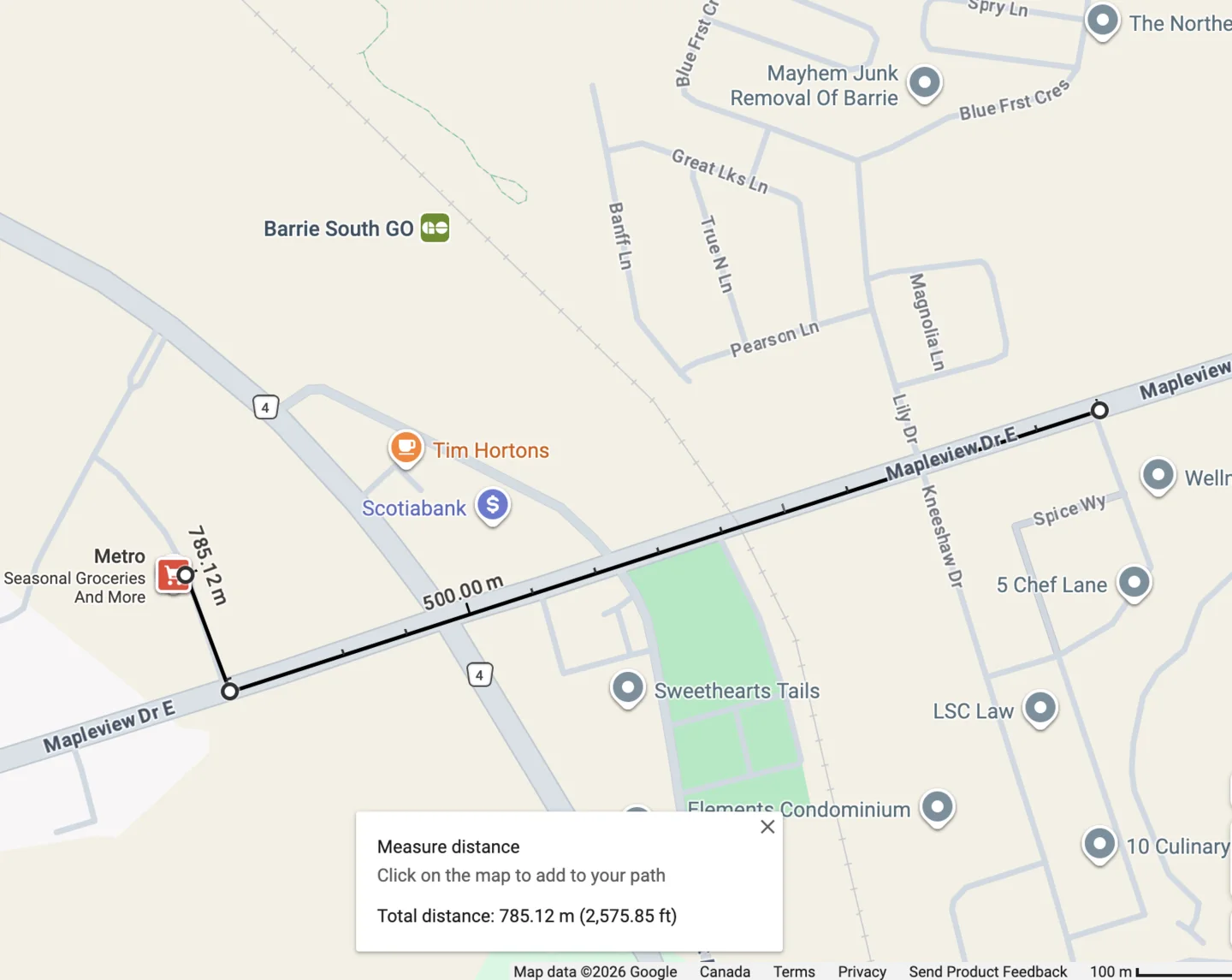
The measured route from Metro toward the condominium area on Mapleview Drive East is approximately 785 metres. That is already beyond the 700-metre standard before accounting for the additional distance to individual building entrances. This example demonstrates why actual walking routes must be evaluated before development is approved. A grocery store that appears nearby on a map does not automatically make a community walkable.
Put daily life on the ground floor
A building containing hundreds of homes cannot send every useful destination somewhere else. Residents should not have to leave their neighbourhood for every grocery item, prescription, appointment, cup of coffee or childcare need. If we want people to make fewer car trips, we must put more of daily life inside the places where they live. That begins at the ground floor.
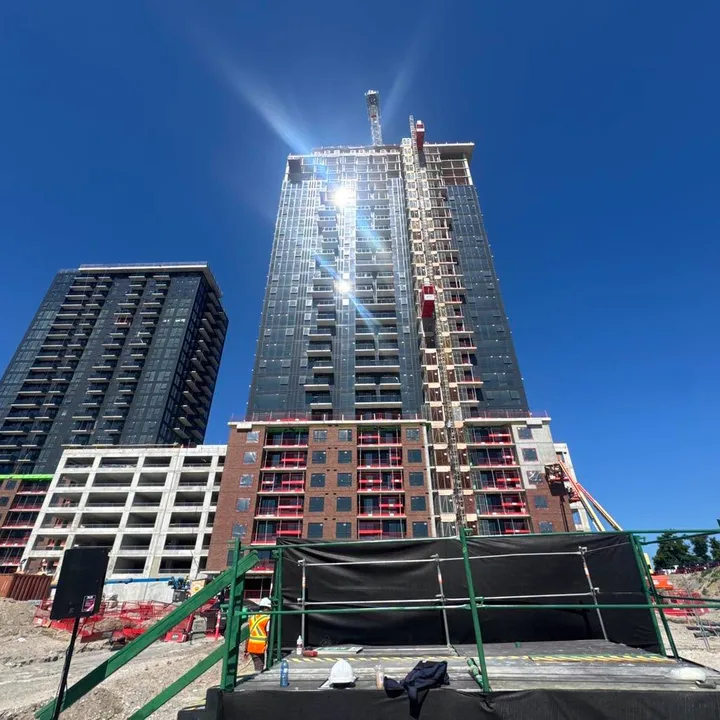
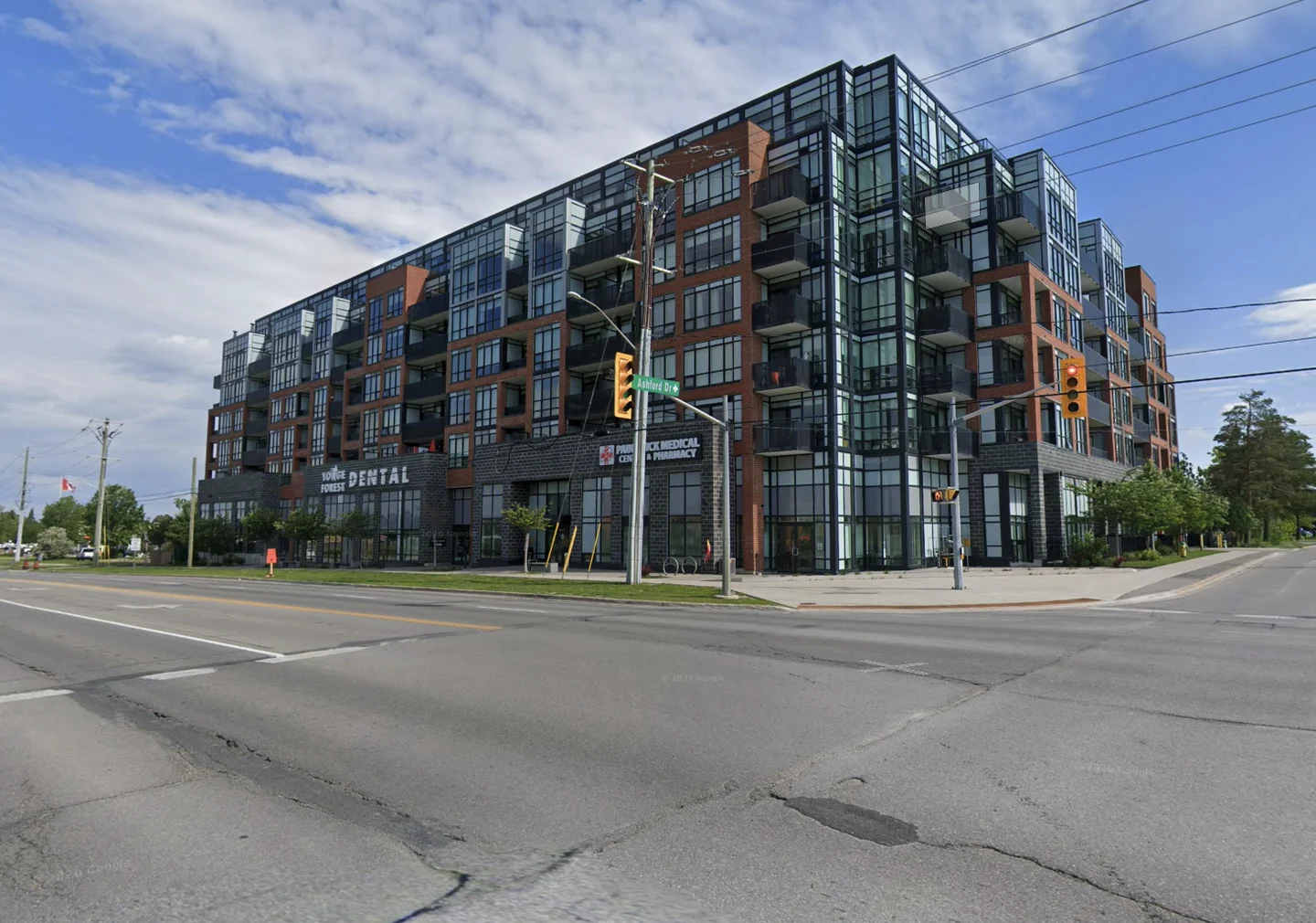
Sky Towers (pictured at the beginning of this article) provides a visible example of the difference between private resident amenities and street-level services. A rooftop patio, fitness room and social lounge may improve life inside the building, but they do not replace the everyday businesses and community services residents need. A residential tower should contribute more than housing units to its neighbourhood. Its street level should help create useful destinations, employment and community activity.
Barrie should require medium- and high-density developments to provide flexible commercial and community space on their first floors. Larger developments should also consider appropriate second-floor space for medical offices, professional services, community organizations and other uses that can operate above street level. These spaces must be practical for small and medium-sized businesses, with manageable unit sizes, visible entrances and room to adapt as the neighbourhood changes.
Density gives local businesses customers within walking distance. Local businesses give residents reasons to walk and allow more daily needs to be met without a vehicle. That relationship benefits residents, strengthens neighbourhood businesses and keeps routine trips off congested roads. Barrie must approve buildings that support complete communities, not isolated towers surrounded by parking and traffic.
Reliable transit must be a real alternative
Public transit cannot reduce congestion unless residents can rely on it. A bus route on a map does not automatically create a practical transportation option. Even when a route serves both ends of a trip, it is not useful when the journey is indirect, connections are uncertain or the next bus is 30 to 60 minutes away. Workers cannot risk arriving late for a shift, parents cannot leave children waiting, and residents cannot miss important appointments. Public transit is only a real alternative when people can trust it to get them to their destination on time.
When transit does not work, the trip does not disappear. The resident drives, asks someone else for a ride or pays for Uber, Lyft or a taxi. As an Uber driver, I take people to work, appointments and other essential destinations every day because Barrie Transit cannot get them there reliably or within a reasonable time. Every one of those paid rides adds another vehicle trip to Barrie’s roads.
At busy times, close to 30 percent of the vehicles I see are working for Uber or Lyft. That tells me the demand for dependable transportation already exists. Residents are paying privately for reliability because the public system does not provide enough of it. Making transit frequent and direct would give more of those passengers a practical alternative.
Walkable, high-density communities and reliable transit must be planned as one system. Concentrated housing provides a steady group of passengers throughout the day, while frequent and direct service gives residents a practical alternative to driving. Barrie should stop approving large residential projects without determining how the people living there will use public transit. My proposal for more direct routes and about 35 additional buses shows the scale of investment required to make transit a practical choice.
The Mapleview proposals build car dependence into Barrie’s growth
The proposals at 750 and 790 Mapleview Drive East will show whether Barrie is serious about responsible growth. Together, the plans show five six-storey buildings with approximately 310 homes. They would join existing condominiums, townhouses and other planned developments whose residents will use the same roads, intersections, transit routes and nearby services. Council should not approve hundreds of homes without first determining how the people living there will reach groceries, work, school, transit and other daily destinations.
The present design leaves residents dependent on Mapleview Drive. Metro appears close, but the measured walking route is already about 785 metres before the additional distance to individual building entrances is counted. These proposals also cannot be judged in isolation. Each project may appear manageable on its own, but congestion is created by the combined effect of every development along the corridor. The approximately 310 homes proposed at 750 and 790 Mapleview Drive East will generate trips throughout the day. Many of those trips will use Mapleview Drive because residents will lack practical walking routes or dependable transit to reach groceries, employment and essential services.
The planned median also creates a vehicle-access problem. Right-in/right-out access makes some trips longer by sending drivers away from their intended direction and toward another intersection before they can turn back. This design concentrates additional turning movements at limited locations instead of giving residents direct access to both directions of travel.
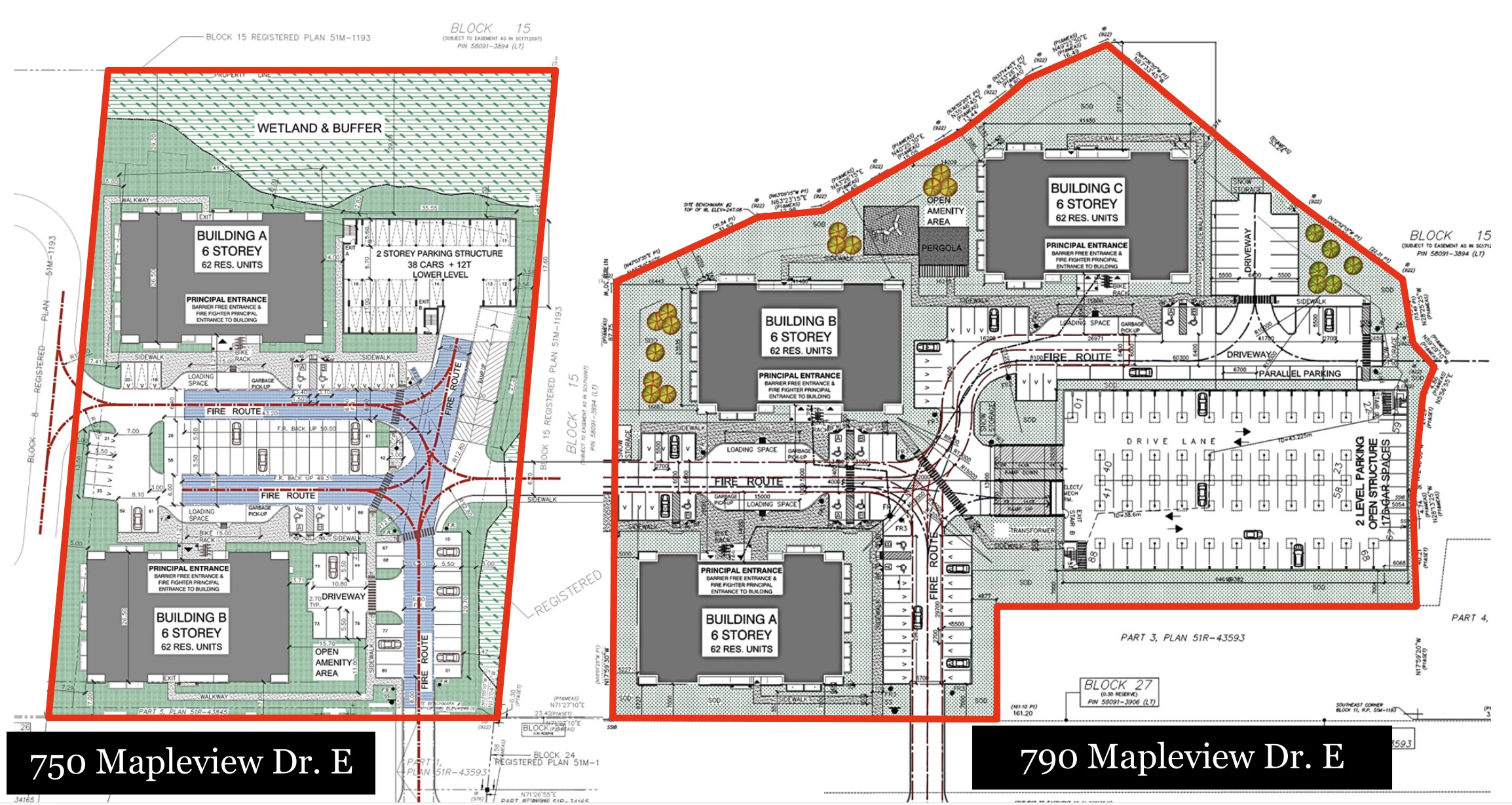
Barrie must stop evaluating developments only within their individual property lines. Traffic studies are useful, but they cannot become permission slips for approving one application at a time. Council must evaluate the cumulative effect of 750 Mapleview, 790 Mapleview and every other approved or proposed development in the surrounding area. Responsible growth means understanding what the entire corridor will experience after all those homes are occupied, not simply whether one project passes a technical calculation today.
What Barrie should require before approval
Approving housing units is not enough. Before Council approves a major residential project, the approval process must demonstrate how the people living there will meet their daily needs without being forced to use a vehicle for every trip. That requires clear answers to six questions:
- Question 1: Are daily necessities within a 700-metre walk?Residents should have a safe and direct walking route to groceries and other everyday needs.
- Question 2: Does the development include practical space for local services?Ground floors should accommodate businesses and community services, with suitable second-floor space where appropriate.
- Question 3: Can residents walk directly to nearby destinations?Sidewalks and pathways should connect to nearby streets, plazas, parks and transit stops without unnecessary barriers or detours.
- Question 4: Can residents rely on public transit?Service should be frequent, direct and dependable for reaching work, school, appointments and essential services.
- Question 5: How will road restrictions affect vehicle access?The design must account for medians and restricted driveways that force longer trips or concentrate turning movements at nearby intersections.
- Question 6: What is the combined traffic impact?The assessment should include every approved and proposed development using the same roads and intersections.
These questions must be answered before approval, not after residents have moved in and congestion has become permanent. Barrie should approve projects that add housing while strengthening the surrounding community. Projects that add hundreds of homes without walkable services, reliable transit or practical access must be redesigned before approval. Responsible growth means solving these problems on the planning map rather than leaving residents to experience them in traffic.
Build housing without building gridlock
Barrie needs more housing, including housing people can afford. But affordability does not end with the price of a home or the monthly rent. When a neighbourhood forces residents to own and operate a vehicle, pay for ride-hailing or rely on delivery services for ordinary daily needs, poor planning places another burden on household budgets.
Services within walking distance and reliable transit give residents more control over how they travel and how much they spend on transportation. They also reduce pressure on Barrie’s roads by allowing more daily trips to be completed without a private vehicle.
That is why every development approved today will shape how Barrie moves for decades. Once residents move in, missing sidewalks, disconnected properties, inadequate transit and car-dependent access are expensive and difficult problems to correct. Council must address these problems before construction begins.
We can build more homes while protecting mobility, affordability and quality of life. To do that, Council must approve communities designed around the people who will live in them, not simply the number of units that can fit on a property. That is the standard responsible growth must meet.
Share a traffic or walkability concern
Sources
- City of Barrie neighbourhood meeting presentation for the proposed 750 and 790 Mapleview Drive East developments
- Traffic Impact Study submitted for 750 Mapleview Drive East
- City of Barrie Mapleview Drive East Transportation Improvements information bulletin
- Sky Towers building and resident amenity information from Skyline Living